

April 12th Newsletter: Budget, Public Safety, and Accountability

TUCSON CRIME FREE COALITION
If you are on social media and not currently following us, you can find TCFC here:
https://www.facebook.com/Tucsoncrimefree/
https://x.com/tucsoncrimefree
https://www.instagram.com/tucsoncrimefree/
https://www.tiktok.com/@tucsoncrimefreecoalition
Not a fan of social media? You can also view our content on YouTube:
https://www.youtube.com/@Tucsoncrimefreecoalition
UNREPORTED CRIME SURVEY IN TUCSON

Take the survey, CLICK ON PIC or HERE:
Help grow our non-partisan coalition and making Tucson safer and more prosperous:
Click below:
DONATE: https://donorbox.org/thanks-for-donating-to-tcfc
April 12th Newsletter: Budget, Public Safety, and Accountability
This week made one thing clear.
At both the City and County level, Tucson is facing serious leadership and accountability questions.
At City Hall, officials are grappling with a growing budget deficit and considering cuts that would directly impact public safety, including closing fire stations. At the same time, major spending decisions remain largely untouched, and the conversation around priorities is just beginning.
Across the courtyard at the County, the Pima County Board of Supervisors has taken the rare step of requiring Sheriff Chris Nanos to respond under oath to questions about his leadership, past conduct, and department operations. That process is now underway, and the outcome will have real implications for public trust.
Below is a breakdown of both conversations and why they matter.
TUCSON CRIME FREE COALITION
Before Cutting Public Safety, Fix the Priorities
The April 21st City Council meeting is shaping up to be one of the most important moments in Tucson’s budget discussion.
That is when City leadership is expected to present and debate the path forward, including the future of bus fares. For the Tucson Crime Free Coalition, that conversation should come first. Before the City considers closing fire stations or cutting essential services, it must be willing to address its largest and most avoidable costs.
TCFC will be issuing a call to action ahead of that meeting, with information on how residents can contact the Mayor and Council directly. The message is simple. Fix the priorities before cutting public safety.
During the April 7th meeting, Councilmembers Nikki Lee and Paul Cunningham have been the voices willing to acknowledge that reality. They have pointed to reinstating transit fares as a practical way to generate revenue as a way avoid deeper cuts to critical services. TCFC supports that position.
At the same time, Mayor Regina Romero has continued to attribute the City’s financial challenges to outside forces, including the flat tax under former Governor Doug Ducey, federal policies tied to Donald Trump, tariffs, and reduced tourism. Romero continues to deflect accountability, yet voters need to remember she has been on the council since 2007 and Mayor since 2019.
City officials are actively considering closing two fire stations, including one serving the central Tucson area near the University and another covering a large portion of the south side. These are not low-use facilities. They are critical parts of the City’s emergency response system.
The consequences of those closures are not abstract. They are immediate and measurable. When fire stations close, response times increase. When response times increase, outcomes get worse. In emergency situations, minutes matter. Whether it is a medical call, a structure fire, or a rescue, delays can be the difference between life and death.
Even members of the Council have acknowledged the impact. Councilmember Nikki Lee has made it clear that while layoffs may be avoided, the community will still feel the effects of reduced service levels.
It is happening at a time when first responders are already under pressure. Firefighters are managing increasing call volumes, working within staffing constraints, and operating in a system that is already stretched. Reducing capacity in that environment does not stabilize the system. It adds strain to it.
This is why the conversation around priorities matters so much.
With Tucson facing a massive budget shortfall, the question is how leadership chooses to address it. Right now, the City is weighing cuts to core public safety services while continuing to avoid a full reassessment of major ongoing expenditures like fare-free transit.
That is the disconnect.
Before asking residents to accept reduced emergency services, the City should be willing to revisit policies that carry a significant financial burden. Reinstating transit fares is not a radical idea. It is a practical step that could generate meaningful revenue and reduce the need for cuts that directly impact public safety.
The April 21st meeting will be where these priorities are tested.
For TCFC, this is not just another agenda item. It is a defining moment. We will be engaging directly and encouraging residents to do the same. More information will be shared on how to contact the Mayor and Council and ensure that this decision reflects the priorities of the community.
Escalating Concerns Surround Sheriff Nanos as Board Demands Answers
The pressure surrounding Sheriff Chris Nanos is no longer limited to campaign criticism, union frustration, or media reporting. It has now reached the point of formal action by the Pima County Board of Supervisors.
In a rare and serious move, the Board has required Nanos to provide sworn answers to a set of questions involving his leadership, department management, prior work history, and public representations. He has been given a limited period to respond, and under Arizona law, refusal to comply could create grounds for further action.
That alone makes this important. But the bigger story is how many separate issues have now converged around one sheriff.
The Board’s action came after extended private consultation with legal counsel and against the backdrop of deepening concern inside and outside the department. Supervisors are not dealing with one isolated controversy. They are dealing with a pattern of questions that now touch credibility, discipline, transparency, morale, and public trust.
One major source of concern involves Nanos’ earlier law enforcement career. Records from his time with the El Paso Police Department reportedly reflect multiple disciplinary incidents, including suspensions, during the late 1970s and early 1980s. Those records matter because they appear to conflict with more recent statements about his professional history, including testimony in which he indicated he had not been suspended. Public reporting also raised questions about how his employment dates and rank were described in public-facing materials before later corrections were made.
That would be serious enough on its own. But it is not happening in isolation.
The Board is also confronting concerns about how discipline has been used within the Sheriff’s Department itself. Former challenger Heather Lappin has alleged in federal court that disciplinary actions were used in ways that affected her candidacy and standing within the department. That case, along with other disputes involving department personnel, has intensified broader concerns about whether internal decisions have been consistent, fair, and free from political motives.
At the same time, labor unrest inside the department has become impossible to ignore. The deputies’ union has already issued a unanimous vote of no confidence and called for Nanos to resign. That is a major development in any law enforcement agency. When deputies lose faith in leadership, it is not just an internal personnel matter. It affects morale, retention, operations, and ultimately the public’s confidence in the department’s ability to function effectively.
All of this is unfolding while the Sheriff’s Department remains responsible for major public safety responsibilities, including high-profile criminal investigations that demand public confidence and institutional stability. That timing matters. Leadership questions do not happen in a vacuum. They happen while the department is expected to carry out serious work on behalf of the community.
There is also a financial and operational layer to the Board’s concerns. Supervisors have already asked Nanos to explain repeated budget problems within the department, including prior instances in which county finance officials warned that the department was on track to exceed its budget. That adds another dimension to the issue. This is not only about past records or political disputes. It is about whether the department is being led in a way that is disciplined, transparent, and accountable in the present.
Sheriff Nanos has indicated that he intends to respond once the formal request is received. Under state law, a written response is enough to satisfy the immediate legal requirement, even if the Board or the public finds the response lacking. That means the next stage may not turn on whether he answers, but on the quality and credibility of those answers.
That is where this becomes bigger than one man or one office.
What is happening now is a test of whether local government will confront difficult facts when they surface, or whether it will settle for procedure without accountability. The Board has taken a formal step. The deputies have spoken. The public has seen enough reporting to understand that the concerns are not isolated or random.
Now the burden shifts to Sheriff Chris Nanos.
He has the opportunity to explain the inconsistencies, defend his decisions, and address the broader erosion of confidence that has developed around his leadership. Whether he can actually do that is a different question.
For the people of Pima County, this is not about political theater. It is about whether one of the region’s most important public safety institutions is being led with honesty, consistency, and sound judgment.
TCFC was clear on this during the last election. We supported Heather Lappin because of the concerns she raised about leadership, accountability, and transparency within the department. Those concerns were not hypothetical. They are now being raised at the highest levels of county government.
Voters should be paying attention.
At the City level, leaders are deciding whether to cut into public safety or make harder decisions about spending and priorities. At the County level, the question is whether leadership will be held accountable when serious concerns are raised.
These decisions affect response times, public safety, trust in law enforcement, and the direction of our community.
TCFC will continue to engage on both fronts.
Ahead of the April 21st Mayor and Council meeting, we will be issuing a call to action with details on how residents can contact elected officials and make their voices heard on the budget and transit fare discussion.
On the County side, we will continue to monitor the response from Sheriff Nanos and the actions taken by the Board of Supervisors.
In other News TCFC Friend Christopher Desimonne is running for Oro Valley Town council and is asking for your Support:


Greetings to all of you!
As you probably heard, I am officially running to be a member of the Oro Valley Town council. We were the first candidate to file with 789 signatures (we needed 525). The election is going down in the third week of July, as the legislature has moved everything a couple of weeks early. That is a very recent development.
Yes, this is a fundraising request (don't close the email!) . I have an amazing team of volunteers and we are going to use every dollar like it's my own.
If you live in Oro Valley, you should support me because I am going to make sure that the town manager/staff is actually managed properly and uses every dollar like it's their own dollar. Also, I am strongly advocating for smart incremental annexation to the south of the town in unincorporated Pima County. This is an opportunity to maximize state shared revenue and generate more sales taxes for a town that's been stagnant on the revenue side recently. It will also assist in developing OV's current footprint in a measured way.
If you don't live in Oro Valley, I'm asking for your monetary support for two reasons. A strong Oro Valley and a strong Marana is a plus for the entire region. After we get Oro Valley on a good financial footing and do the proper annexation, it may one day lead to a really big dream that myself and others have of creating Arizona's newest County(working title: Santa Catalina County). You got a dream big, my friends!
Here's the donation link for my campaign. My goal is to reach somewhere between 40 and $50,000 between now and the middle of July. DONATE HERE
I've been humbled by the support I've received so far and I appreciate all your help in the past, present and future!
Your humble servant and friend,
CD
Join Our America for and event with Tucson Police Chief Prieto
Our Arizona activists are hosting a Safer Streets, Brighter Futures event this coming April featuring Tucson Police Chief Monica Prieto.
The event is free of charge and food will be provided.
Learn what we can do as grassroots activists to support the Tucson Police Department
Date: Wednesday, April 15, 2026
Time: 6:00 PM – 8:00 PM MST
Location: American Legion Post #36 5845 E. 22nd St Tucson, AZ 85711
Must RSVP to attend: Eventbrite.
Contact: Arizona State Director Paul Parisi at paul@ouramericafoundation.org
We look forward to seeing you in what’s sure to be an insightful event!
For more information on Chief Prieto, here is a brief biography:
Tucson Police Chief Monica Prieto graduated from Desert View High School and earned a bachelor’s degree in public administration from the University of Arizona.
She joined TPD in 1999 and has served in assignments that include patrol, the Community Response Team, narcotics, internal affairs and investigations.
As deputy chief, Prieto oversaw the Executive Office Bureau, which includes the Office of Professional Standards, the Public Information Office and the Wellness Division. She has also commanded the Investigative Services Bureau and managed major criminal investigations and critical incidents.
Prieto completed executive education with the Police Executive Research Forum’s Senior Management Institute for Police and is a graduate of Northwestern University’s Center for Public Safety, School of Police Staff and Command.

https://ouramericafoundation.org/attend-our-april-event-with-tucson-police-chief-prieto/

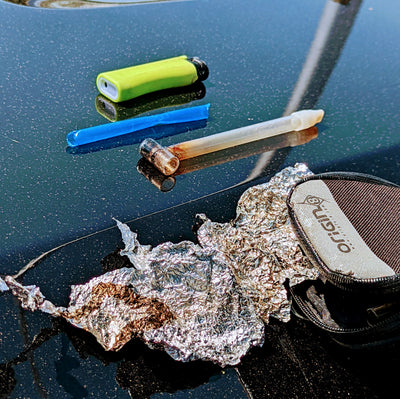



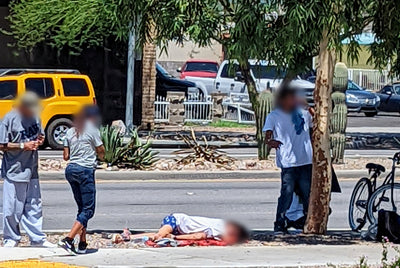
Me again. KVOA also ran the Star Village story. Link:
https://www.kvoa.com/news/local/tucsons-star-village-sees-success-six-months-after-opening/article_6d64350d-cf88-44ac-9212-18345ba8f6d6.html
Although this story notes that 8 people have found permanent housing, they omitted a stat that was in the now-deleted KGUN 9 story. That stat is the total number of people that have been through Star Village in six months, and the number is 82.
Which means that the failure rate is 90%.
Update: The Star Village article has been removed from the KGUN site. I guess reality doesn’t square with their narrative.
Speaking of accountability, here’s more Star Village propaganda:
https://www.kgun9.com/news/community-inspired-journalism/midtown-news/s-t-a-r-village-check-in-six-months-later
And how long was she a patrol officer engaging in law enforcement activities? How many arrests? How many felony arrests? How many cases successfully prosecuted? How many bad guys put away?
The record keeps skipping. Have you ever noticed the countless times Mayor Regina Romero and Council blames someone else for their epic failures? What they are good at is giving themselves unjustified exorbitant pay raises.
Leave a comment